

Greg Bennett: A Man of Two Worlds

By Bill Harper
It's another hectic day for Greg Bennett. He's handling a major promotion for Fox Sports Net, and just as soon as he finishes up a call with them, California Lieutenant Governor Cruz Bustamante is on the line, calling to confirm a golf outing. Finally, after a parade of staff members has marched through his office to make reports and seek guidance, Greg settles in to be interviewed. But before the first question is asked, his assistant sticks her
head in the door. Ringling Brothers is on the line, and Greg's agency, Luna Bacardi Aspen, is pitching them. As Greg makes an appointment he slips a red rubber clown nose onto his face, his eyes sparkling, a smile lifting the corners of his mouth and creative ideas already dancing through his brain. "I'm going to wear this the first time I meet them," he says.
Meeting Greg for the first time, it's not all that surprising to encounter his creative approach to the promotion business. No, the biggest surprise is that this blond-hair, blue-eyed guy born in New Jersey, is the President and Chief Creative Director of
one of the country's most successful international Hispanic integrated promotional marketing agencies. Then he throws another surprise at you. Unlike most agencies that started out by catering to the Hispanic market, Luna Bacardi/Aspen now counts on almost half of its business from general market clients.
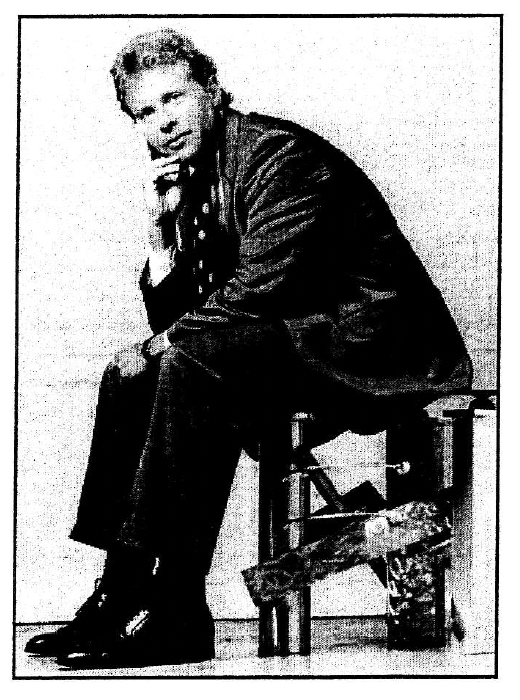
To understand how this crossover took place, you have to look into Greg Bennett's past. His father, a member of the international banking community, moved his family to Mexico City when Greg was 3 months old. Growing up in Mexico, Greg didn't learn English until he was 10, and was a citrzen of Mexico until he turned 18. Eventually, he returned to the United States and earned a B.A. in interpersonal communications from Florida State University. He remained at FSU until 1982, doing graduate work in international business communications.
Before leaving Mexico, however, Greg also found time to become one of the top ranked water skiers on the tour. He started skiing at the age of 5, and went on to become a 9-time Mexican National Champion and top ranked skier in the United States. He continued competing while in college, skiing for the FSU team, one of the premiere water skiing teams in the nation. Oddly enough, Greg's ability to feel at home in the water may be one of the biggest deciding factors in his career path.
When I finished my graduate work at FSU, I went out on 24 job interviews and got 24 rejections," says Greg. "Totally bewildered, I went to a Club Med in Cancun to lick my
wounds. I started teaching scuba diving, and part of my job was to lead the guests on shark feeding dives. Talk about preparing yourself for the business world. I mean, no one can intimidate after you've been swimming with sharks. Then one day I got my big break when I met the President of Club Med who hiied me as their Marketing Development Manager. After a short while, I became the Director of Operations for LatinAmerica. I helped lead our expansion with several new clubs and archeological villages in Mexico."
After several years with Club Med, a job that Greg still recalls with a wistful look in his eye, the Florida Division of Tourism hired him to be their Global Marketing and Promotions Director." This was a dream job," says Greg. "I got to promote Florida as a destination all around the world and set up satellite offices in Japan, Belgium and Argentina. Frankly, the hardest part of the job was getting all of the local Chambers of Commerce to create a unified front to package the entire state, thus prolonging a visitor's stay. Once we got everyone to agree on our direction, however, we were enormously successful."
With Greg's success for the state of Florida, the city of Miami was the next to call. Drugs, violence and unrest in Little Haiti were running rampant, so Miami was in dire need of an image makeover. "I tried to tr.un the diversity ofMiami into a positive. My campaign theme, 'Come See Our Neighborhoods', was much more image than tourism oriented. Just when we were starting to get some serious momentum and tourism was booming, however," says Greg, a touch of frustration in his voice, "Newsweek did a cover describing Miami as the Casablanca of the South. We had worked so hard only to find ourselves back at square one, so I decided to move on and start my own business."
Because of Greg's passion for sports, starting his own integrated sports marketing agency had always been one of his goals, so Greg headed off to Atlanta and opened the doors of Bennett Creative Sports Group (BCSG). Having been on the client side working with ad agencies, sports marketing agencies and PR firms, he was anxious to test his own theories about how an agency should be run. In particular, he hoped to create a platform of client services that promoted trust and allowed his little agency to take chances on doing better work. His ideas began paying off when he landed several high profile accounts and then a rather prestigious special project for Ja-pan Airlines. "I had always thought that doing great work was important, but that great relationships are even more important," says Greg. "I mean, if you want to do great work, first you have to get the client's complete trust, because they're the ones who let you do it. We billed $8 million with only a handful of employees, and we were having the time of our lives."
Greg's success with BCSG probably doomed his fledgling agency. Eastern Airlines got wind of his promotions for JAL and lured him back to the client side. And this time the stakes were huge. Eastern was on the brink of insolvency, yet the FAA had just awarded them new routes throughout South America. The only hitch was that once the routes were officially approved, planes had to be flying, passengers had to be in the seats, and Eastern had absolutely no marketing programs in place.
Greg stepped in as Eastern's Marketing and Promotions Director for the Americas, and suddenly his ability to live in two worlds became his greatest asset. With his fluent Spanish and extensive travel throughout the world, he found that he blended in with the South American culture just as easily as he did with the corporate culture of boardrooms in the North. By setting up co-op promotional packages with Pepsi, Hilton and Marriott, he soon had full loads of North Americans heading South, and full loads of South Americans returning to the United States. And if that wasn't enough, he also headed up a successful business to business campaign with cargo incentives for shipments heading both ways. "Our success was our ability to communicate," says Greg. "I traveled all over South America, meeting with government agencies, tourism groups and travel agents. I loved Argentina. They have such a rich culture, such an interesting blend of people. I could imagine living there one day."
Unfortunately for Eastern, Greg still had that entrepreneurial spirit he had briefly tasted when he started BCSG, so in 1990 he returned to Atlanta and created a new company called ProAm Marketing. He invested $5,000 of his own money and opened up an office in the file room of a car leasing business where his wife Julie worked. He had one phone, one light and no clients. At first he paid his rent by translating car lease documents into Spanish for Julie's boss. Soon, however, he talked his way into a promotional deal with Snickers. They wanted to promote their candy bars at Latino concerts in Los Angeles, so Greg flew to L.A. and met with Abel de Luna, a well-known Hispanic record producer and promoter who had his own label. That's when Abel asked Greg to become the President of his $30 million music and entertainment enterprise with the crossover goal of bringing Latin music to mainstream America. Their promotion was a huge success and generated quite a buzz in the trades. "We got so much press because our promotion was so unique," says Greg. "After that we immediately got Keebler, Lever Brothers, Land O'Lakes and other blue chip clients. Everything we did was measurable and generated store level traffic."
It was time to move to L.A., but first the new alliance needed a fresh name. "One night, Abel and I were celebrating our recent success with one of South Florida's favorite-and rather potent-beverages, the Rum Runner," remembers Greg. "Luna Bennett just didn't sound right, so we creatively borrowed the name from the main ingredient of the Rum Runner, and Luna Bacardi was born."
Greg's business proposition was simple, but unique: bring corporate America to the places Hispanics really live. Then, put them in touch with large bodies of Hispanic consumers at community soccer and baseball leagues, churches, even low-rider associations. "I just felt that the Hispanic population was so under-served in most integrated marketing plans," says Greg. "This was really exciting, because this was a huge niche, and, because no one had ever addressed it before, there wasn't any right or wrong way to do it. For example, we went in to see the archdiocese in Los Angeles and got them to allow sampling of Keebler cookies right in the church. That naturally led to a successful direct mail campaign aimed at parishioners."
In 1993, Abel de Luna decided he wanted to focus on his entertainment business (which was now a $100 million enterprise), so Greg spun off his integrated marketing and promotions and promptly built that into a multi-million-dollar agency. Having learned every aspect of the business from the ground up, including operations, finance, strategic planning, production, even writing and directing commercials, Greg knew exactly what he wanted to do. "I'm an avid reader," says Greg, "and after reading books by Richard Branson, Mark McCormack and Michael Ovitz, I started using some of their concepts as a model for my business plan."
And then something really cool started to happen. Because Greg has always tended to his business relationships with the greatest care-he claims he spends more time with clients than he does with his family-new opportunities started to arise. Over dinner or a game of golf, clients started suggesting that because of Luna Bacardi's success with the Hispanic market, perhaps they could handle general market promotions as well. "Hey, I wasn't that surprised," says Greg. "Look, I'm in the relationship business. I build relationships between a brand or service and the end user. And I understand both cultures very well."
In 2000, Greg sold Luna Bacardi to Aspen Promotions and remained as President. "It's always hard to give up something you created, but this was a really big move for us," says Greg. "We had reached so many of our goals and had a wall of top industry awards, but Aspen has over $300 million in billings and is the largest privately held integrated promotional company in the country, so this gave us the opportunity to grow our business even more."
One of Greg's biggest passions is his philanthropic pursuits. He sits on the board of directors for Stop Cancer, he created his own foundation which donates clothes to underprivileged kids so they won't feel awkward at school, and he donated a music library to the UCLA Oncology Center to be used by patients undergoing chemotherapy. So it's no surprise that Greg has recently turned his attention to a new venture that has less to do with marketing than it has to do with saving lives. One night while Greg was watching CNN, reporter Lynn Russell did a story about Sudden Infant Death Syndrome (SIDS). SIDS is responsible for thousands of deaths each year worldwide, and its consequences are always traumatic for the families involved. The reporter explained that doctors were recommending that babies sleep on their backs as the best way to prevent SIDS. Unfortunately, she continued, not a single product on the market could ensure that infants would remain in this preferred sleeping position. That's when Greg started scribbling on a pad of paper and came up with a new idea for baby pajamas that prevent babies from rolling over onto their faces in their cribs. Greg's new company, Baby BackSleeper, is already making these revolutionary new pajamas, and the proceeds of all sales of Baby BackSleeper will be donated to the American SIDS Institute and the UCLA Neonatal Center.
There's a knock at the door, and Greg's assistant sticks her head in the door again. A working lunch has been planned and sandwiches from Jerry's Famous Deli have just arrived. The interviewer senses that he is about to be dismissed, so he asks for one last pearl of wisdom. Greg says, "It's all about building relationships on many levels and delivering great work." Just when the interviewer is starting to think that this is some pretty serious stuff, Greg Bennett slips on his red rubber clown nose and joins his staff for a little lunch."


